Protocol Archives • Browse all History titles in HD

'Mata Hari', the daughter of a kampong headman is captured by the Japanese. She witnesses the atrocities committed by the invaders, who tortured her father to death and round up innocent women to become prostitutes and mistresses for their commanders. Not wanting to cower to the enemy, Mata Hari decides to form and lead a guerilla force to fight the Japanese.
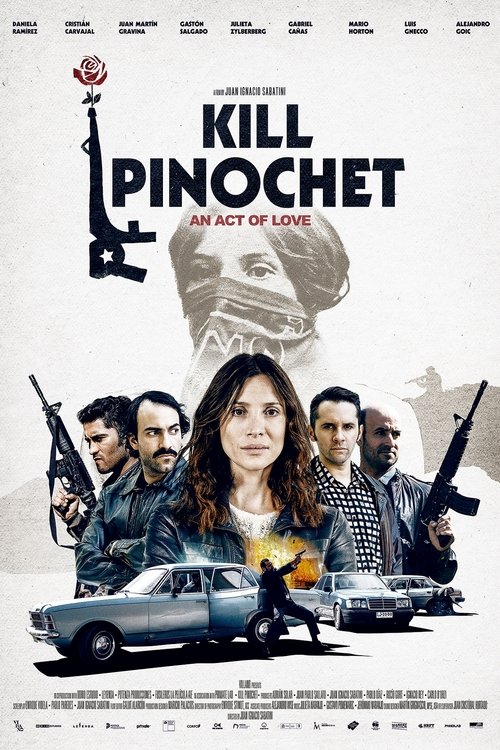
Chile, September 1986. Tamara, commander of the communist guerrilla group Manuel Rodríguez Patriotic Front, and her comrades-in-arms set out to overthrow the military regime installed in 1973 by assassinating the dictator Augusto Pinochet.

In the 1960s, the suburbs were meant to be modern havens for newcomers from rural France, Portugal, Spain, North Africa, and Africa, helping rebuild post-war France. Large housing complexes symbolized this ideal, offering comfort, heating, and electricity. But by the 1980s, disillusionment set in as economic crisis, unemployment, poverty, crime, racism, and police violence took hold. Mohamed Bouhafsi tells the story of a dream that didn’t last.

"The Perfect Human Diet" is an unprecedented global exploration to find a solution to our epidemic of overweight obesity and diet-related disease - the #1 killer in America. The film bypasses current dietary group-think by exploring modern dietary science, previous historical findings, ancestral native diets and the emerging field of human dietary evolution; revealing for the first time, the authentic human diet. Film audiences finally have the opportunity to see what our species really needs for optimal health and are introduced to a practical template based on these breakthrough scientific facts.

A look at a group of Union and Confederate cavalry from late 1862 until the end of the Civil War in 1865.

January 6, 1980. President of the Sicily Piersanti Mattarella is going to Mass with his family when a young man approaches his car and shoots him in cold blood, killing him. The young Deputy Prosecutor on duty that day is Pietro Grasso, future General Anti-Mafia Prosecutor and President of the Italian Senate. His investigations are continued by Giovanni Falcone, who uncovers dangerous connections between the Mafia, the ruling Christian Democratic Party, neo-fascist terrorists, and secret services.
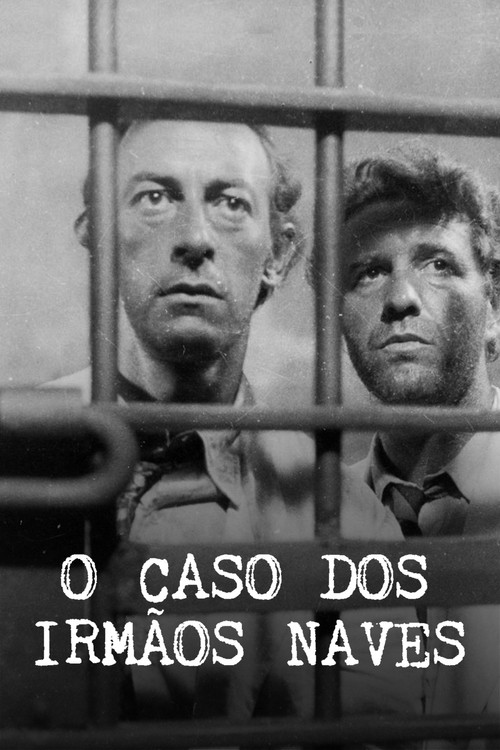
After their relative and associate runs way, the Naves brothers inform the police of the incident, who end up arresting them under the accusation of murdering the missing person. The brothers are tortured in order to confess a crime they did not commit while their wives are raped.
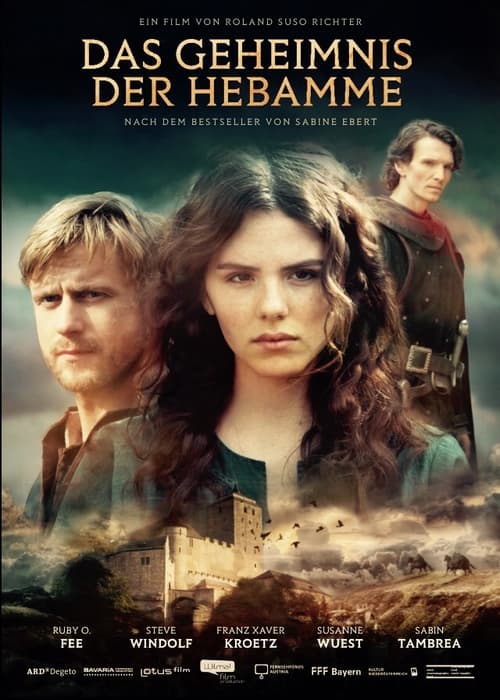
Marthe is a girl with a special gift: she can cure illnesses. But the time she lives in is marked by superstition and godliness. When Marthe can not help the burgrave's wife from her village, the girl has to flee. Your path crosses that of Ritter Christian, who moves eastward into the Mark Meissen with a group of Frankish settlers. In the Middle Ages an unimaginably long and arduous way. Christian has a hard time avoiding the fascination of Marthe, but their diverse backgrounds make a relationship impossible and the settlers are afraid of the weird girl.
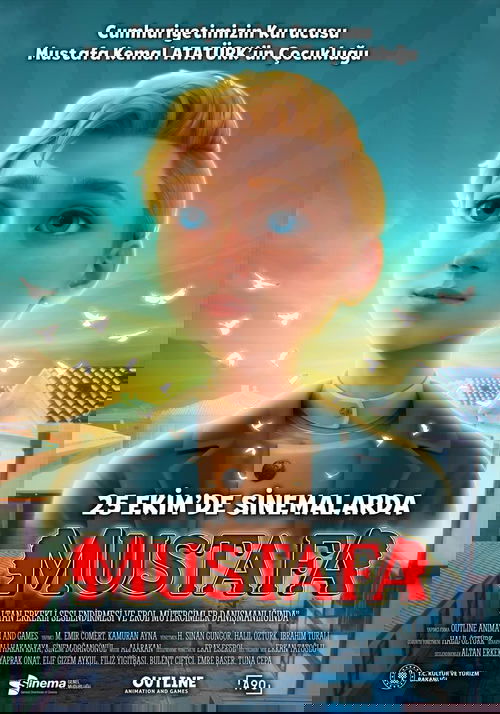
Mustafa's childhood, his dream of becoming a soldier that gradually took root in his mind, and his journey to achieve this dream inspire 8-year-old Kemal, who lives in the present day. Mustafa's story is told through the words of Kemal's 85-year-old grandfather, Arif. Kemal, who wants to become an astronaut when he grows up, is presented as a child whose dreams are not supported by his family. Kemal's parents want him to set goals he can achieve so that he will not be disappointed in the future, but even though Kemal begins to agree with them in some ways, he cannot give up his dream of becoming an astronaut. Kemal's mother senses her son's unhappiness and sends him to his grandfather. When Arif, listening to his grandson, begins to tell the story of Mustafa Kemal, Kemal finds himself in the world of a child who, like him, has a great dream and, like him, seems unlikely to achieve it.

Political and sexual repression in Hungary, just after the revolution of 1956. Passionate and determined, Eva gets a job as a journalist. There, she meets Livia and is attracted to her. Livia feels much the same, but as a married woman, has doubts and hesitations. In their work, they (and Eva in particular) bang up against the limits of telling political truths; in private, they confront the limits of living out sexual and emotional truth.

The "unsinkable" Titanic was a dream come true: four city blocks long and a passenger list worth 250 million dollars. But on her maiden voyage in April 1912, that dream became a nightmare when the giant ship struck an iceberg and sunk in the cold North Atlantic. More than 1,500 lives were lost in one of the greatest disasters of the 20th century. Now, using newsreels, stills, diaries, and exclusive interviews with survivors, Titanic: The Complete Story recounts the sensational history of the premier liner. In Part I: Death of a Dream, the largest ship ever built is christened in Ireland before a cheering crowd of 100,000. Witness the disaster this trek becomes as numerous iceberg warnings go unheeded and the ship sinks in the icy North Atlantic. In Part II: The Legend Lives On, over-packed lifeboats edge away from the crippled liner as a futile SOS signals flare into the night--leaving 1,500 passengers to a watery grave.
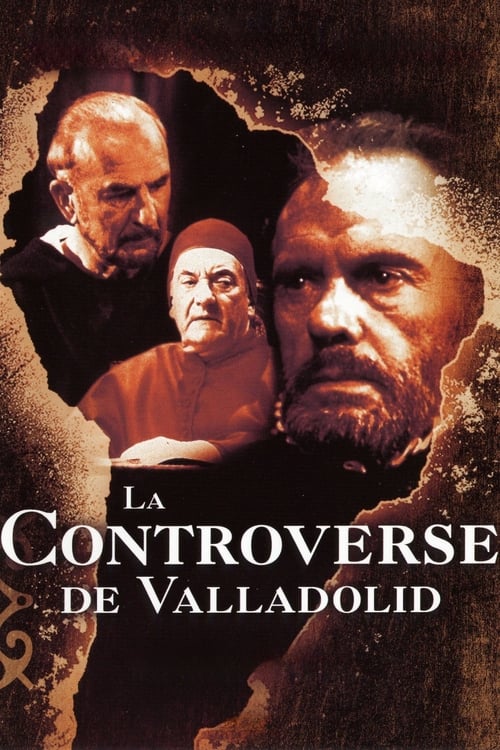
Spain conquered the seas, found a new world and different realities than the one known in Europe. But a question needed to be answered with what they found in those new territories: do the Indians have souls? The Church, bound to protect and convert the natives and the conquerors who treated them like slaves and thought they were only merchandising, expose their arguments and reasonings at what would be known as the Vallidolid controversy. Between them, there's a cardinal hearing both parts and trying to get reasonable answers from this critical question.
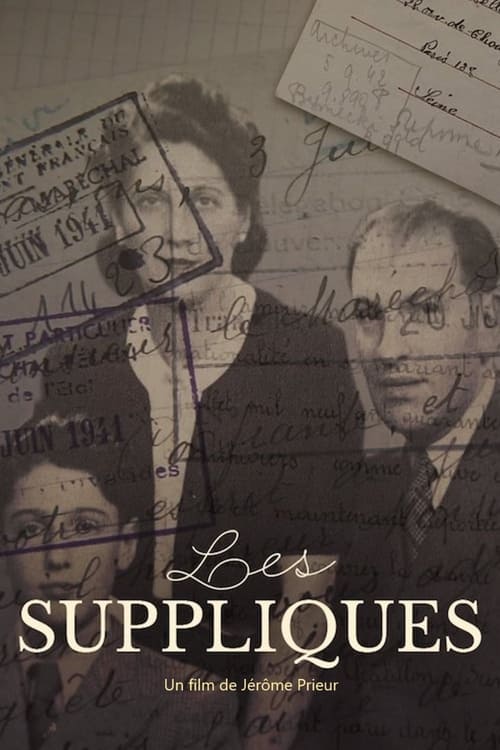
Since the defeat, the Nazis, who were the masters of the occupied zone, and the French State, which had been ruling the so-called free zone since Vichy, ordered the Jews to take a census. From the spring of 1941, whether they had been French for several generations or naturalized for a few years, foreigners who had taken refuge in France or stateless people who had been driven out of their country, they were put on file, arrested or threatened at any time. Some wrote to the administration, or directly to Marshal Pétain, who seemed to them to be the last resort. These requests are called Suppliques. Men, women, sometimes children, tried as best they could, by all means, to loosen the trap. They address themselves to their executioners, but they do not know it.

Oda Nobunaga (1534–1582) was a major daimyo during the Warring State period of Japanese history. He was the second son of Oda Nobuhide, a deputy military governor with land holdings in Owari province. Nobunaga lived a life of continuous military conquest, eventually conquering a third of Japanese daimyo before his death in 1582. Telling the story of his rise to prominence as he leads an army of 4,000 men against the 40,000 troops of Lord Imagawa Yoshimoto to prevent the arrogant daimyo from crushing the Oda clan and taking control of the entire nation. From a newly restored anamorpic widescreen print, this is the ultimate warlord movie.

Poland under Stalinist rule, 1953. A young nun Anna is brought to a prison where an influential priest is kept in. She discovers the priest is the man she loved a few years before. Communist authorities try to make her spy on him now.
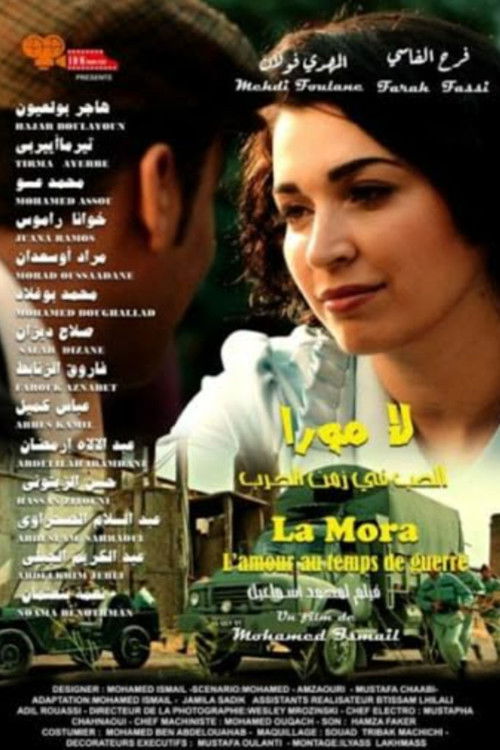
After her mother, Maria, passes away, Rosa, a young Spanish woman, discovers the secret of her biological roots in one of her mother's old letters. The letter recounts how Maria fell in love with Rosa's father, Choaib, who was one of the many young Moroccan soldiers (known as the Regulares) forced to fight alongside General Francisco Franco's troops in the Spanish Civil War. Rosa journeys to Morocco to meet her paternal family and discovers the reasons for her father's death.

Alive and Kicking gives the audience an intimate, insider’s view into the culture of the current swing dance world while shedding light on issues facing modern American society.

Eduardo Coutinho was filming a movie with the same name in the Northeast of Brazil, in 1964, when there came the military coup. He had to interrupt the project, and came back to it in 1981, looking for the same places and people, showing what had ocurred since then, and trying to gather a family whose patriarch, a political leader fighting for rights of country people, had been murdered.

Karol, talented 25-year old, makes money in the family company and leads his own prospecting buisness. When his father, a flying instructor, crashes and dies, it's up to Karol to make a living for him and his mother. Along with two best friends he decides to build an airship. When big money comes into play, Karol quickly realizes, how much it costs to have your own company.
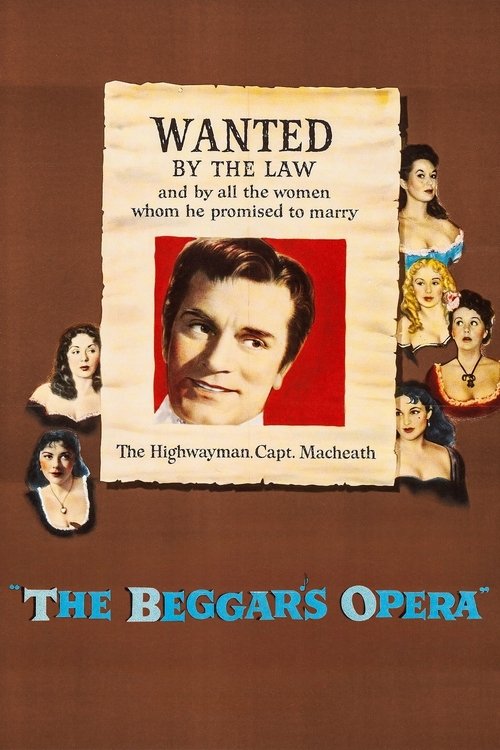
Adaptation of John Gay's 18th century opera, featuring Laurence Olivier as MacHeath and Hugh Griffith as the Beggar.