Protocol Archives • Browse all History titles in HD
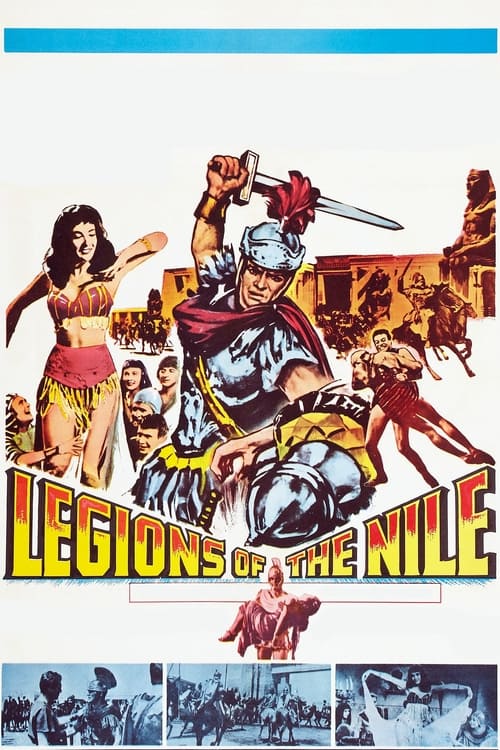
Octavio secretly sent his consul Curridio to Alexandria in a final attempt to reach peace. In the city, he meets Berenice, a mysterious and beautiful dancer who falls in love. Actually, the dancer is the queen Cleopatra who leads a double life using this name.

A Jewish boy living in Amsterdam at the onset of World War II is taken to a concentration camp with his parents. Based on the memoir of Holocaust survivor Jona Oberski.

The sinking of the RMS Titanic remains one of the most enduring and mysterious tragedies of the 20th century. For decades, investigators and amateurs alike have floated theories for why it occurred and who was to blame for the extraordinary loss of life, but no one answer could fully explain what happened. Until now. To mark the 100th anniversary of the infamous disaster, Smithsonian Channel will premiere Titanic's Final Mystery. The two-hour special investigates a century of theories and uncovers astonishing new forensic evidence that proves the most likely theory for the case.
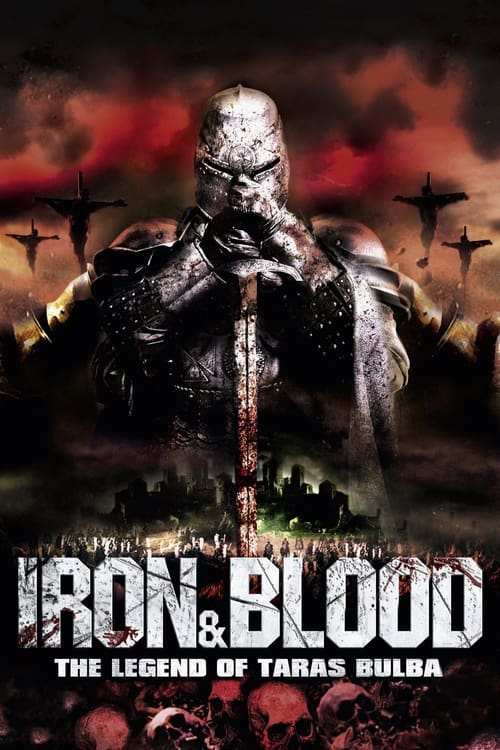
Set in the 16th century, this is a story about Ukraine's Cossack warriors and their campaign to defend their lands from the advancing Polish armies.
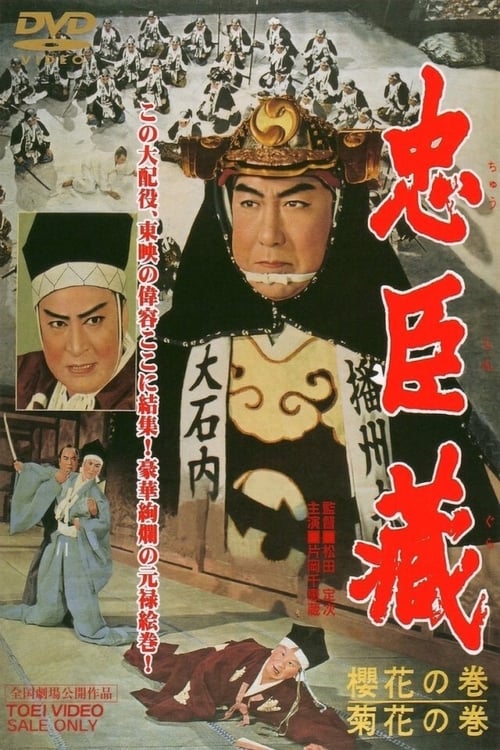
While the story of the Ako Clan's vendetta has been told countless times, never before has there been an array of major motion picture stars to bring new life to this timeless tale. Starting with the corrupt practices of Lord Kira and Yanagi-sawa, the Shogun's Secretary, which in essence led to the incident of Lord Asano's attacking Kira in the Pine Corridor of the Shogun's Palace, this is the definitive version. Asano Takumi no kami was a young lord with high scruples, who refused to join in the general corruption and bribery which ran rampant in the capital at that time. By not giving bribes, he angered Kira Kozuke no suke the elder lord in charge of protocol at the Palace. Refusing to teach the younger man, and giving him false instructions was only the beginning. Insults followed, and a man of honor had no choice but to draw his sword in anger. Forty seven masterless samurai are willing to give their lives to avenge their lord.

Assigned to accompany two priests on a mission to convert the court of Kublai Khan to Christianity, Marco Polo is abandoned in the mountains when the priests, doubting the very existence of China, turn back. Polo eventually pushes bravely forth alone toward the fabled country where he is accepted as an envoy into Khan's court. Marooned on the far side of the world, Polo, accompanied by his servant, Pedro, advances as a Mongol grandee for twenty extraordinary years. What he eventually brings back with him to the West is a chronicle that changed history forever.

Sicilian bandit Salvatore Giuliano's bullet-riddled corpse is found facedown in a courtyard in Castelvetrano, a handgun and rifle by his side. Local and international press descend upon the scene, hoping to crack open the true story behind the death of this young man, who, at the age of twenty-seven, had already become Italy’s most wanted criminal and celebrated hero.

Set against the backdrop of 9/11, the story of how a new generation kickstarted a musical rebirth for New York City that reverberated around the world.

A musical drama in three acts that explores all the facets of love. Venice Baroque Orchestra, conducted by Andrea Marcon. Andrea Palladio Choir, with Enrico Zanovello as choirmaster.

After returning home, Haluk, who has lived abroad for years, begins to tutor sixteen-year-old Ümran and tells her a story from years ago. Ümran thinks that it is a story about something else, but the story concerns her closely.
Discovery examines the history of "Golden age of Piracy." The program takes a detailed look at the harsh lives of pirates, their tactics, motivations and why they would choose such a life. The geopolitical forces that lead to the proliferation of pirates and their final demise are explained.


The story of Holocaust survivor Emil A. Fish, who was nine years old when he and his family in Bardejov, Slovakia were sent to a concentration camp.
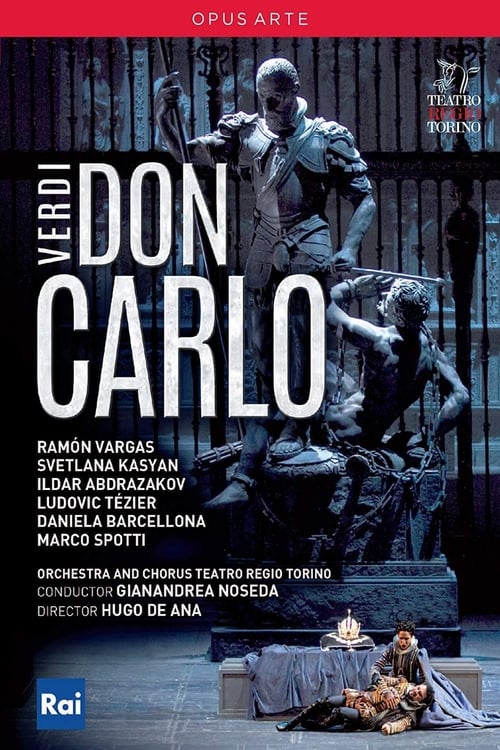
Teatro Regio’s 2013 revival of their highly successful 2006 production of Verdi’s Don Carlo celebrates the 40th anniversary of the theatre’s reopening in 1973. With traditional staging and lavish costume design, the production garnered high acclaim in the national and international press, with GB Opera commending the ‘sumptuous’ setting and French online music magazine ResMusica praising director Hugo de Ana’s decision to revive the show ‘in all its splendour’. Shown here in the four-act version, Don Carlo is the fascinating tale of father-son power struggles, adultery and love that borders on incest. The cast – under the powerful baton of Gianandrea Noseda – is headed by renowned Mexican tenor Ramón Vargas, and also features Ludovic Tézier, who has been hailed as ‘one of the best Verdian singers of our time’

Lyrical and meditative, The Amish answers many questions Americans have about this insistently insular religious community, whose intense faith and adherence to five hundred year-old traditions have by turns captivated and repelled, awed and irritated, inspired and confused for more than a century. With unprecedented access to the Amish built on patience and hard-won trust, the film is the first to deeply penetrate and explore this profoundly attention-averse group. In doing so, it paints an extraordinarily intimate portrait of contemporary Amish faith and life. It questions why and how the Amish, an insistently closed and communal culture, have thrived within one of the most open, individualistic societies on earth.


David Whitmer, Oliver Cowdery and Martin Harris face ridicule and persecution when they claim to have seen angels and hefted golden plates containing ancient inscriptions.
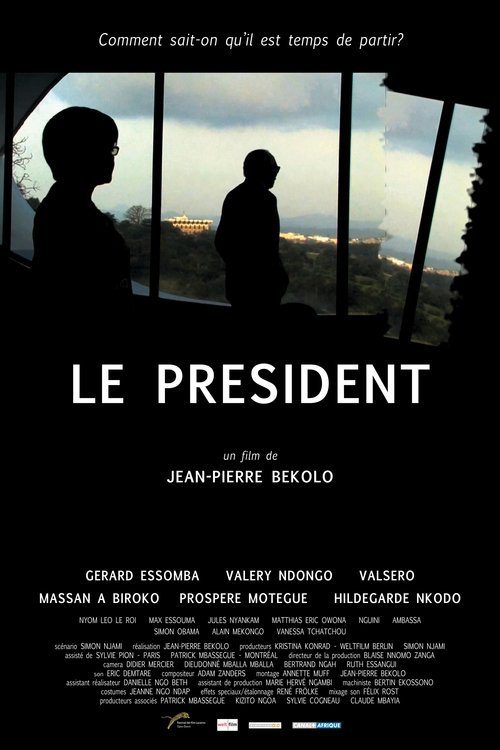
Cameroonian filmmaker Jean-Pierre Bekolo's newest work uses split-screens (at times, up to four images simultaneously) to present a fake documentary in which "the president" has disappeared; talk-show hosts, rivals, politicians and even rappers chime in on what may have occurred, and what their president for life has—or has not—done for Cameroon.
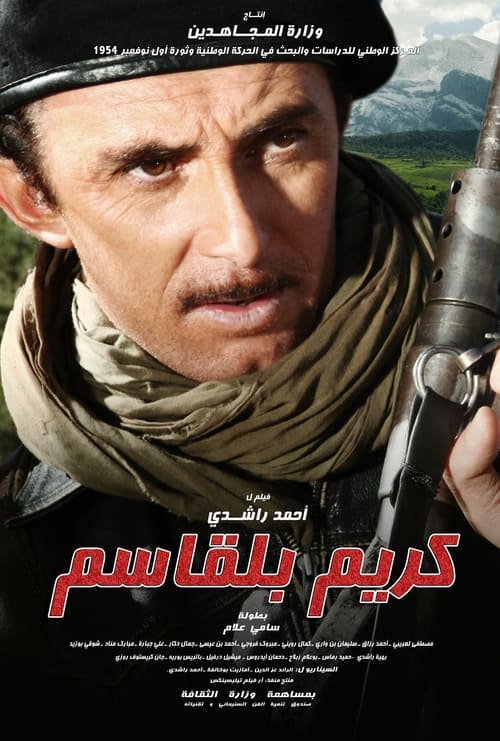
This film retraces the combat journey of Krim Belkacem, one of the leading figures of the Algerian War. When he left the Dellys barracks in October 1945, the day after the Second World War, Krim Belkacem was 23 years old. He is a man revolted by the May massacres in Sétif, Guelma, Kherrata and several other localities in the ravaged country. But it is also and above all a young Algerian who questions the future of Algeria. On March 21, 1947, Krim at the age of 25, he dug up his "Sten" submachine gun, he took action against the boss of his douar who was none other than his cousin. He goes into hiding with six companions. He meshes this entire part of Algeria with a dense and dense network with the sole objective of taking action which will lead to the outbreak of the armed struggle on November 1, 1954.

"In order to preserve all our achievements for posterity it is necessary to resort to the aid of the motion picture, which will be a great contribution to the immortalization of our art. The years are passing by, and we hope that our achievements, registered on film, will aid future generations to learn and perfect themselves. In the not too distant future our first experience in this field will be shown to a wide public: pictures of the methodology of classical ballet at the Moscow and Leningrad Ballet Schools. This film will be a scientific aid in outlying districts as well." - Agrippina Vaganova