Protocol Archives • Browse all History titles in HD

This historical melodrama (later remade by Henry Roussel himself in 1932 and Richard Pottier in 1952) set during the reign of Napoleon III of France. Here, Raquel Meller plays a Spanish flower girl who saves the life of the French empress Eugenie de Montijo (played by Suzanne Blanchetti), by taking her place in her carriage. When the carriage is overthrown by the anarchist's bomb, the girl survives because of the masses of violets in the imperial carriage, the empress' favorite flowers.

Commentary on Japanese internment during World War II.
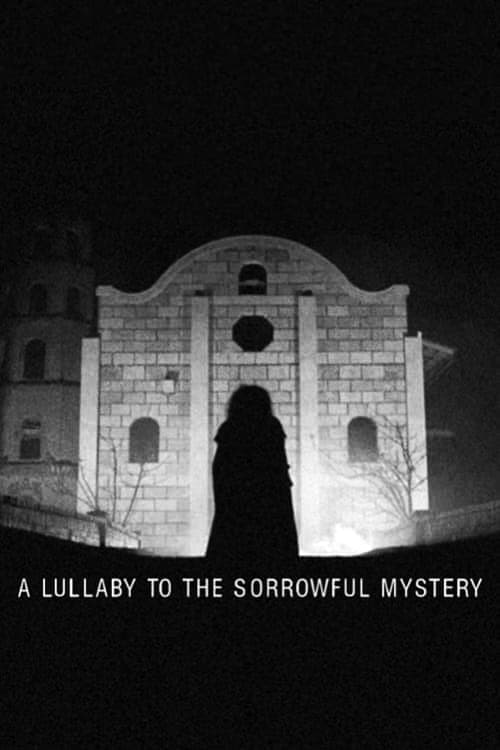
Andrés Bonifacio is celebrated as the father of the Philippines Revolution against Spanish colonial rule. This eight-hour epic examines this myth, undertaking an expedition into history through various interwoven narrative threads, held together by an exploration of the individual’s role in history.
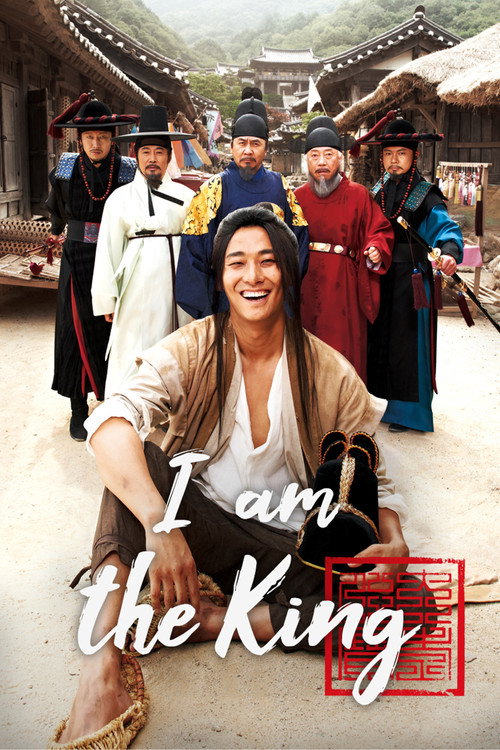
King Taejong of Joseon decides to name Grand Prince Chungnyeong, his third son, as the heir apparent to the throne. Pressured by the decision, Chungnyeong decides to escape the palace.
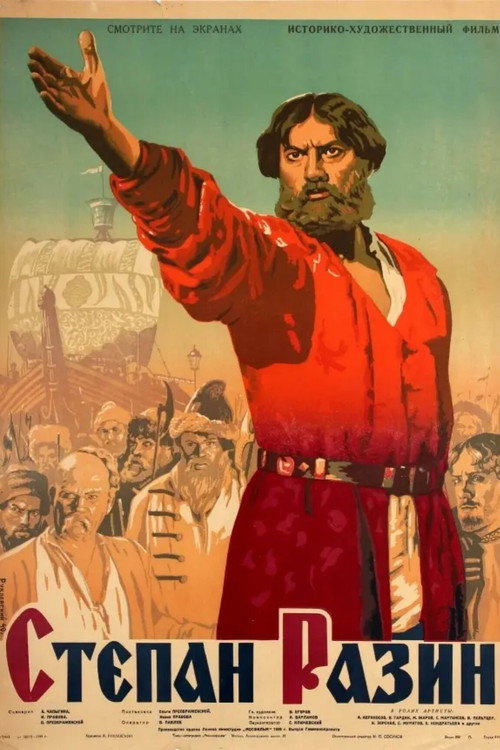
Don Cossack Stepan Razin vowed to take revenge on the boyars for his tortured friends. Having led the rebellious peasants, he becomes the leader of an entire army. Humiliated and insulted people flock to him from all over the Russian land.

During the Japanese occupation of Korea, the Japanese Empire seeks to eradicate the Korean language and identity. In retaliation, a small group of Korean patriots try to protect their language by compiling the first Korean language dictionary.

Warsaw, 1968. Students protesting against the illegal expulsion of their colleagues from university and in defence of play Dziady, directed by Kazimierz Dejmek and performed at the National Theatre, which has been taken off the bill. Among the protesting young people are also Hania and Janek. Their families are on both sides of the March barricade. Young and madly in love with each other, like in Shakespeare's Romeo and Juliet in a country in revolt, they fight for their affection. Will their love survive? Will they be able to overcome the adversities that fate throws at them?
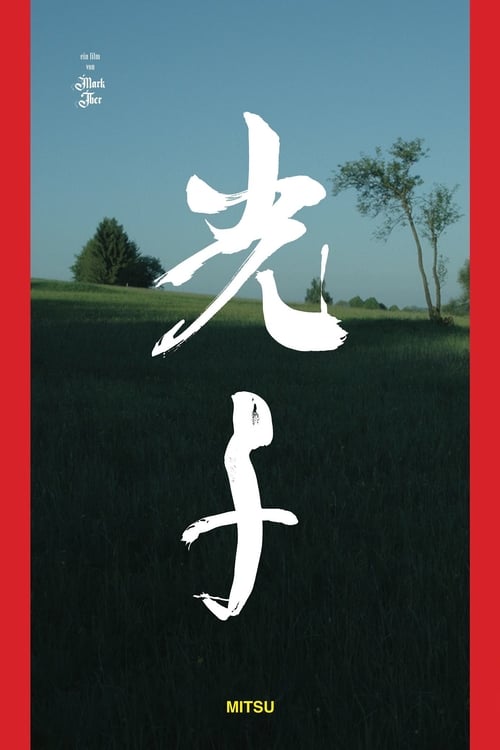
Countess Mitsuko Maria Thekla Coudenhove-Kalergi was the first Japanese female to come to Europe at the turn of the 19th century. She lived mostly in the area of the Bavarian border and administered the Poběžovice Castle, an estate of her deceased husband, Count Heinrich Coudenhove-Kalergi. She was a strong and well educated woman, never left by the nostalgia for her home. The film is loosely inspired by historical sources, relying on the unique imagination of Mark Ther and his proven feel for the narrative of the untold.

Poland, 1970. When popular protests erupt in the streets due to rising prices, the communist government organizes a crisis team. Soon after, the police use their truncheons and then their firearms. The story of a rebellion from the point of view of the oppressors.

January 6, 1980. President of the Sicily Piersanti Mattarella is going to Mass with his family when a young man approaches his car and shoots him in cold blood, killing him. The young Deputy Prosecutor on duty that day is Pietro Grasso, future General Anti-Mafia Prosecutor and President of the Italian Senate. His investigations are continued by Giovanni Falcone, who uncovers dangerous connections between the Mafia, the ruling Christian Democratic Party, neo-fascist terrorists, and secret services.
The film reconstructs in Berlin a scene in front of the German consulate in Moscow, using a single and continuous camera shot, with no cuts. Russian immigrants are standing and waiting to get a visa; there's a different gate for each travel reason. Help and assistance is being offered in front of the entrances. A woman walks by the waiting line and is withheld: Her bag is too big and must be handed in. She looks for a place where she can leave it.

An Ibach piano receives a makeover after surviving an international move and playing for four generations of pianists.
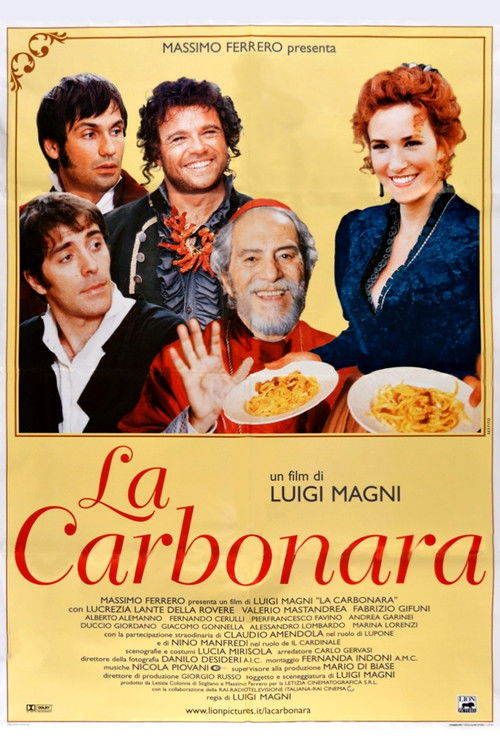
Cecilia is a commoner who runs an inn, where the specialty is the "spaghetti alla carbonara". Moreover, the woman is tied to the movement of young patriots, named "Carbonari", who want a united Italy, and are struggling against the power of the pope. Cecilia believes she lost her husband in a fatal accident, and has made a new lover: Fabrizio, who is also a patriot. One day the guy's saved by a monk, when he is about to be imprisoned by the soldiers of Cardinal Rivarola. The monk is the husband of Cecilia, not dead in the accident, and now he helps her to fight against the power of Rome with the Carbonari.
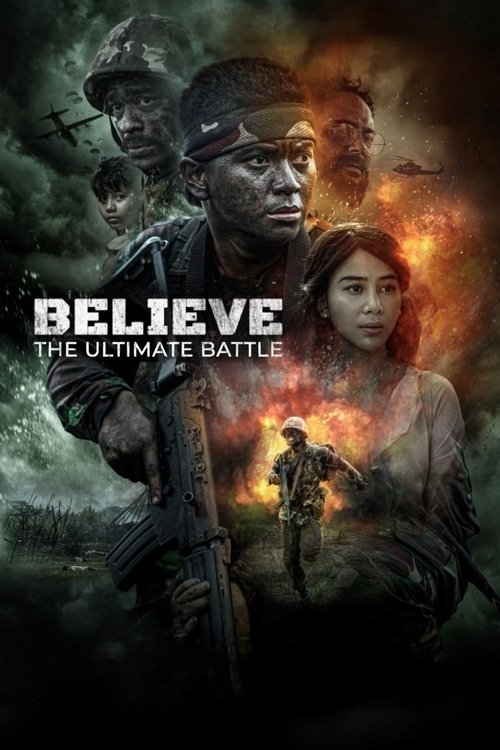
The son of a veteran named Agus was faced with the shadow of his father's absence, so he grew up to be an undisciplined child. Until the veteran died and made his son follow in his father's footsteps to enter the military world.
Based on the novel of the same name by William David Owen.
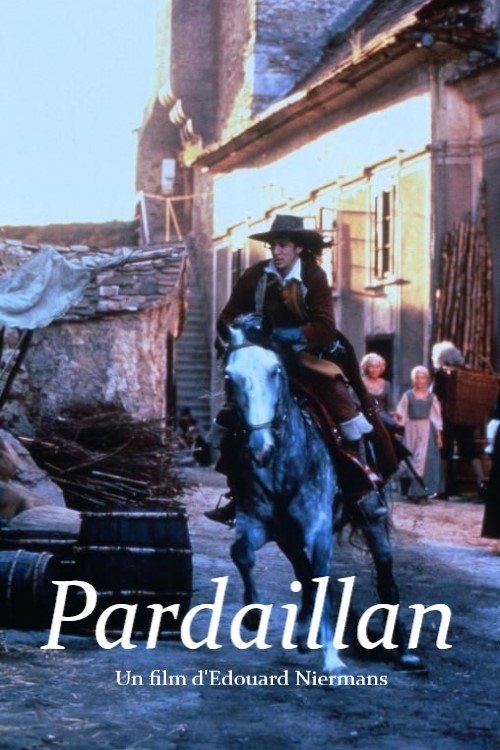
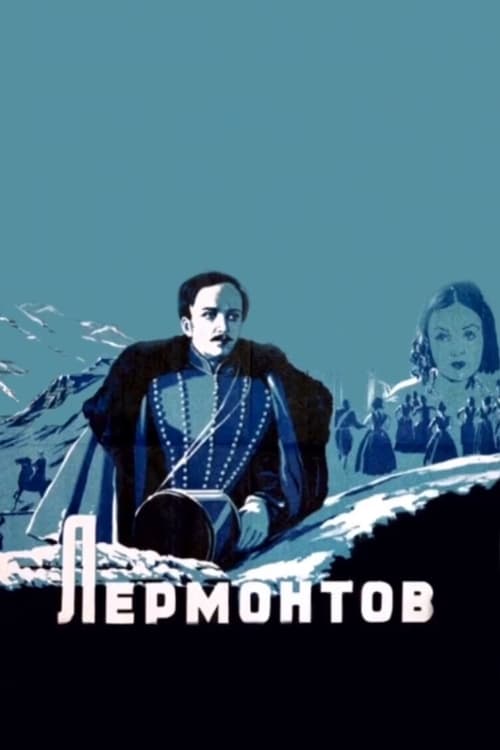
Chronicle of the life of Russian poet Michail Lermontov, from the final days of Alexandr Pushkin to the fatal destiny of the poet himself.
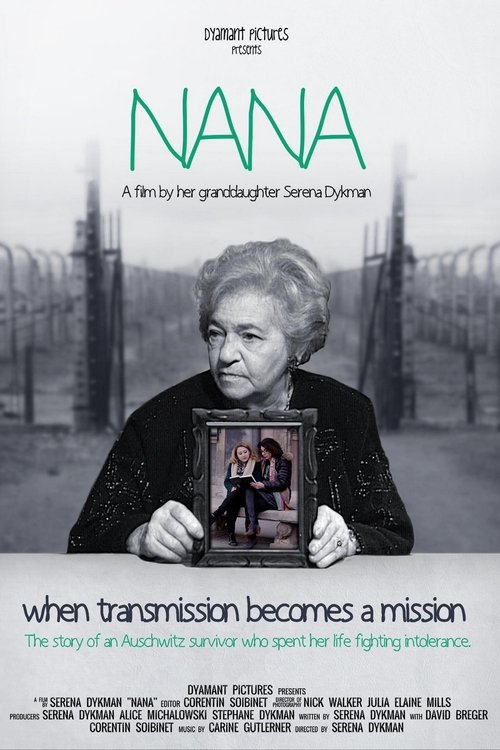
Maryla Michalowski-Dyamant, born in Poland, survived Ravensbruck, Malchow, and Auschwitz, where she was the forced translator of the “Angel of Death”, Dr. Mengele. She dedicated her post-war life to publicly speaking of her survival to the young generations, so that it would never be forgotten or repeated. Alice and Serena, her daughter and granddaughter, explore how Maryla’s fight against intolerance can continue today, in a world where survivors are disappearing, and intolerance, racism and antisemitism are on the rise.
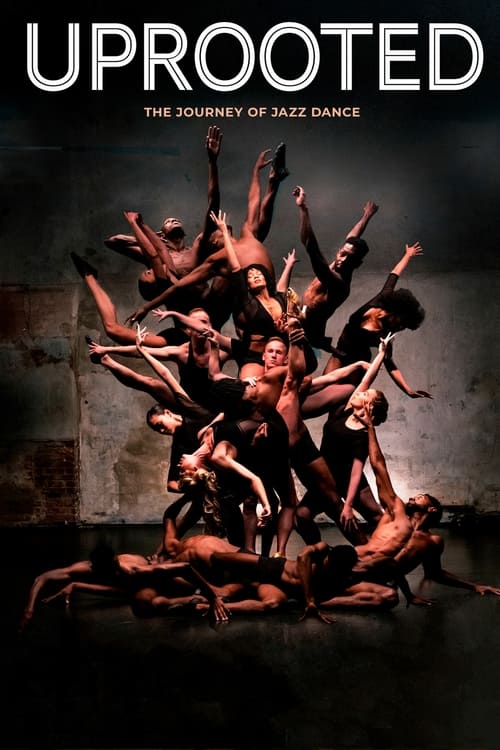
Follow the fascinating evolution of jazz dance from its origins in Africa, through to its modern-day interpretations which reveal the political and social influences affecting the dance form today.
Regin, a grieving sister, seeks out the Norns – mythological beings who can alter human destinies – in the hope of preventing her sister’s death. But when the man responsible for her death is the one aiding her, Regin must decide what is worth more: her vengeance or her acceptance.